
Hiring a professional painting contractor is an investment in your home. Whether you’re planning an interior repaint, exterior painting project, or kitchen cabinet refinishing, the proposal you receive should provide more than a price.
It should explain exactly what you’re purchasing, how the work will be performed, and what responsibilities both you and the contractor are agreeing to.
Unfortunately, not all painting estimates provide the same level of detail.
Some contractors offer brief estimates outlining the general work and total price. Others provide comprehensive proposals that identify materials, preparation requirements, specific repairs, payment terms, warranties, and contractual conditions.
Neither document length nor presentation alone determines whether a contractor is qualified. What matters is whether the written agreement clearly establishes expectations.
At Brush & Pride Painting, our proposals also serve as our contracts once accepted. We believe homeowners should understand the full scope of work and the applicable terms before making a commitment.
Here’s what we recommend looking for when reviewing a professional painting estimate.

1. A Clearly Defined Scope of Work
The most important component of any painting proposal is the scope of work.
This section should identify the surfaces being painted and describe the work included in the quoted price.
For an interior painting project, that might include walls, ceilings, baseboards, doors, window trim, or cabinetry.
For an exterior project, it could include siding, fascia, soffits, shutters, doors, and other architectural features.
Don’t assume that every surface discussed during the initial walkthrough is automatically included.
For example, a proposal stating “complete interior painting” may mean something different to the homeowner than it does to the contractor.
Does it include ceilings? Closets? Interior doors? Window trim?
The proposal should answer those questions.
The more clearly the scope is defined, the less room there is for misunderstanding once work begins.
2. Specific Surface Preparation and Repair Details
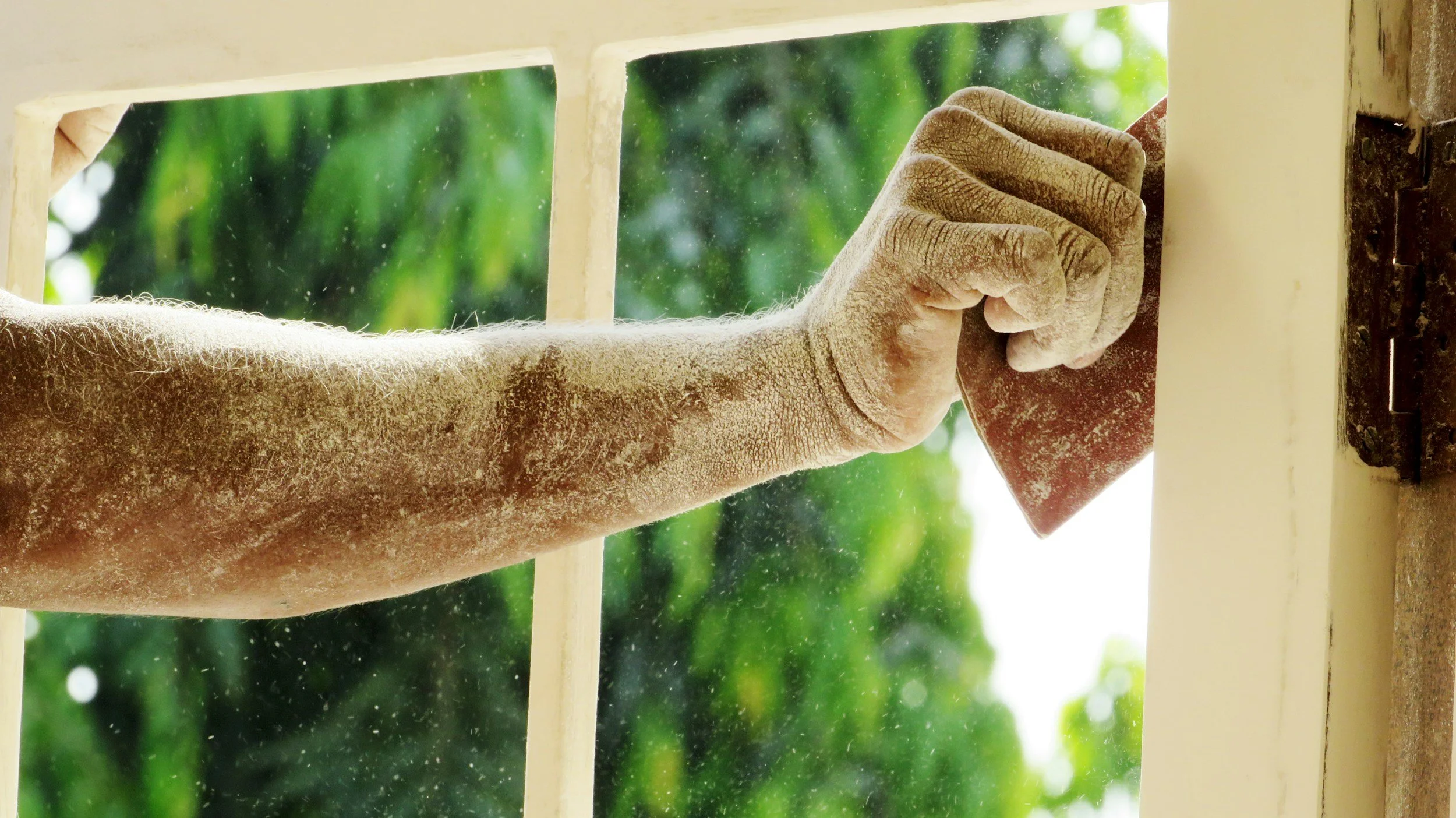
Preparation is one of the most important parts of a professional painting project.
It’s also an area where homeowner expectations and contractor assumptions can differ significantly.
A proposal might state that the contractor will perform “necessary surface preparation.”
But what does that actually include?
Will the contractor fill nail holes, repair drywall cracks, sand deteriorated trim, scrape loose paint, replace damaged wood, or address failing caulk?
Those details matter.
Why repair quantities and locations should be documented
Consider an exterior painting proposal that includes the statement:
“Wood rot repair included.”
A homeowner might reasonably interpret that to mean all visible wood rot around the property will be repaired.
The contractor, however, may have intended to replace only one deteriorated board identified during the estimate.
Both parties could believe they understood the agreement.
That’s precisely the kind of misunderstanding a detailed proposal should prevent.
When repairs are included, the agreement should identify the affected locations and describe the extent of the work.
For example:
“Replace deteriorated lower trim sections at two front-facing windows.”
That description is considerably more informative than simply stating “wood rot repair.”
For larger projects, identifying repair quantities, specific elevations, and affected components becomes even more important.
A detailed scope may make the proposal longer, but it also helps homeowners understand exactly what they’re investing in.

3. Paint Manufacturer, Product Line, and Finish
Professional painting estimates should identify the materials being used.
Simply stating that the contractor will use a recognizable paint brand doesn’t provide enough information.
Manufacturers such as Sherwin-Williams and Benjamin Moore offer multiple coating products designed for different applications and performance requirements.
The proposal should specify the intended manufacturer, product line, and finish sheen for the applicable surfaces.
This is particularly important when different coating systems will be used throughout the project.
For example, walls, trim, cabinets, and exterior siding may require different products.
What about paint colors?
Final color selections don’t necessarily have to appear in the original proposal.
However, they should be confirmed in writing before painting begins.
Written color documentation should identify the selected colors and where they will be applied.
This helps prevent misunderstandings involving accent walls, trim colors, cabinet finishes, and other design selections.
The homeowner should know which materials are being purchased and where those materials will be applied.
4. Protection of Your Home and Property
One of the most common concerns homeowners have about hiring contractors is the potential for mess or property damage.
You’ve hired someone to paint your walls—not your carpet, furniture, fixtures, or landscaping.
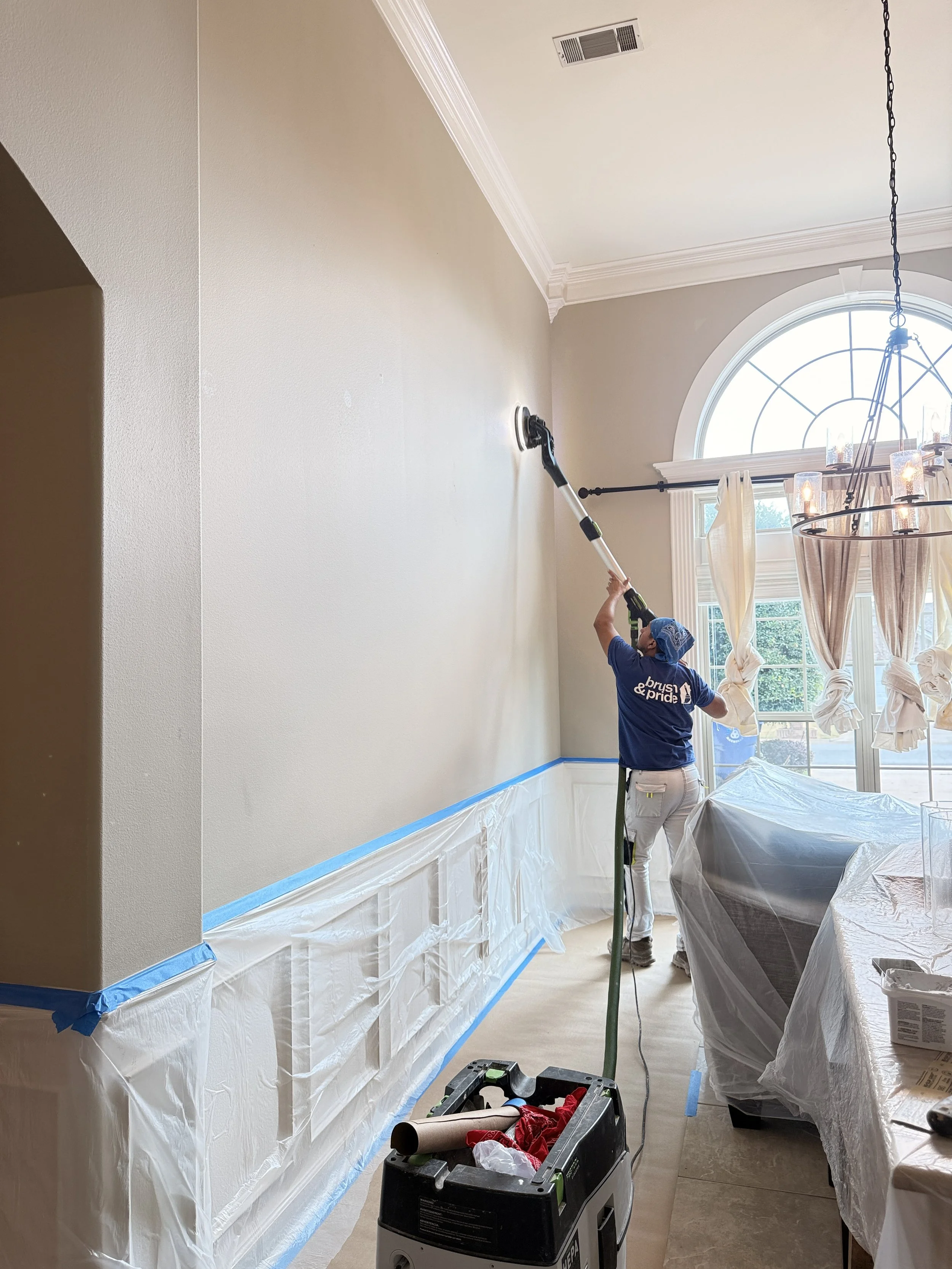
A professional painting proposal should establish expectations for protecting the surrounding property.
For interior projects, this may include protecting floors, furniture, countertops, fixtures, and adjacent surfaces.
For exterior projects, protection may extend to landscaping, walkways, windows, roofing materials, and surrounding structures.
The proposal should also address job-site cleanup and the condition in which the contractor intends to leave the property.
Special considerations for older homes
Homes built before 1978 may contain lead-based paint.
When renovation work disturbs painted surfaces in covered pre-1978 housing, federal lead-safe renovation requirements may apply.
Homeowners should verify that their contractor has the appropriate EPA Renovation, Repair and Painting (RRP) certification when required.
At Brush & Pride Painting, lead-safe projects can involve extensive containment and cleanup procedures.
We’ve even vacuumed grass to collect stray paint chips outside the immediate containment area.
It’s an example of how seriously we approach protecting the property and maintaining a clean job site.
Homeowners should understand that lead-safe work involves specific requirements beyond ordinary painting preparation and cleanup.
5. Clear Inclusions, Exclusions, and Change-Order Procedures
Even a thorough initial walkthrough cannot reveal every condition that may be discovered during a painting project.
For example, deteriorated wood may extend farther than initially visible, or removing loose coatings may reveal additional substrate damage.
That’s why a professional proposal should explain how work outside the original scope will be handled.
At Brush & Pride, we believe additional work should be discussed and agreed upon before proceeding.
A written change order should identify the additional work, associated cost, and any applicable scheduling adjustments.
Why written authorization matters
Imagine hiring a contractor for an exterior repaint.
During preparation, the contractor discovers what appears to be wood rot and begins removing siding or window trim without first discussing the proposed repairs with you.
You may suddenly find yourself facing unexpected charges or alterations to your property that you never authorized.
A clear change-order provision helps prevent that situation.
Discovering a problem doesn’t automatically authorize a contractor to perform additional work.
The contractor should explain the condition, recommend an appropriate solution, and obtain approval before undertaking work outside the agreed scope.
If the homeowner declines the proposed work, the contractor should explain any consequences for the original project and document the decision.
This process protects both parties.

6. Deposit Requirements and Payment Terms
Before accepting a painting proposal, homeowners should understand exactly when payments are required and under what conditions.
A professional agreement should identify the total contract price, deposit amount, payment schedule, remaining balance, and accepted payment methods.
It should also explain applicable cancellation and refund provisions.
How Brush & Pride handles deposits
At Brush & Pride Painting, we require a 20% deposit to reserve a project on our schedule.
Our proposals explain the applicable deposit and cancellation terms.
Deposits are generally refundable within three days of payment. After that period, refund eligibility may depend on the circumstances and whether project preparations, material purchases, or mobilization have begun.
If Brush & Pride cannot fulfill its contractual obligations, we return the deposit in accordance with our terms.
Other contractors may structure their deposits and payment schedules differently.
Homeowners should review the written conditions carefully and confirm that they comply with applicable requirements.
Understand your final payment
Your agreement should also explain when the remaining balance becomes due.
Will you pay by check, credit card, electronic transfer, or financing arrangement?
Are progress payments required?
Are there additional payment-processing fees?
These questions should be answered before the project begins.
No homeowner should be surprised by payment requirements that weren’t clearly explained in the agreement.

7. Scheduling, Project Duration, and Potential Delays
Scheduling is another important consideration when reviewing a painting proposal.
Many experienced contractors maintain full calendars, particularly during busy seasons.
At Brush & Pride, residential projects are often scheduled weeks or even months in advance.
We encourage homeowners to begin planning early rather than waiting until the project becomes urgent.
A deposit doesn’t necessarily guarantee an exact start date
At Brush & Pride, scheduling occurs after the required deposit is received.
However, painting schedules can change.
Exterior projects depend heavily on weather conditions. Occupied homes may require additional coordination, and unexpected conditions can affect project duration.
A professional agreement should explain whether proposed start and completion dates are estimates or firm commitments.
Homeowners should also understand how scheduling changes will be communicated.
Plan for realistic project conditions
A painting project might take a certain number of days under ideal circumstances.
But professional scheduling should account for foreseeable obstacles.
Weather interruptions, preparation requirements, drying times, access limitations, and unexpected repairs can all affect progress.
At Brush & Pride, we plan for contingencies rather than assuming every project will unfold under perfect conditions.
Homeowners benefit from approaching their projects with the same understanding.
A realistic schedule, supported by clear communication, is more valuable than an overly optimistic promise.
8. Warranty Coverage and Limitations
A painting contractor’s warranty deserves careful attention.
Homeowners should understand what the warranty covers, how long it lasts, and what conditions are excluded.
A warranty against coating failure is not necessarily protection against every type of damage that may occur after the project is completed.
Understanding Brush & Pride’s lifetime warranty
Brush & Pride Painting includes a lifetime material and workmanship warranty with qualifying interior repaint and cabinet refinishing projects, subject to the written warranty terms included in the proposal.
The warranty addresses qualifying failures, such as adhesion problems, peeling, or cracking attributable to covered material or application failures.
It does not cover ordinary wear, scratches, impact damage, pet damage, weather-related deterioration, or other excluded conditions.
Unusual discoloration may be considered when it results from a covered material or application failure rather than environmental exposure or ordinary fading.
Warranty repairs are limited to correcting the affected areas in accordance with the written terms.
For example, a qualifying adhesion failure affecting one cabinet door would generally involve repairing that door—not automatically refinishing the entire kitchen.
The same principle applies to isolated failures on walls or trim.
When comparing contractors, homeowners should read the actual warranty language rather than relying solely on statements such as “lifetime warranty” or “workmanship guaranteed.”

9. Contractor Licensing, Insurance, and Business Verification
Before hiring a painting contractor, homeowners should verify that the company is properly established and carries the credentials and insurance appropriate for the work.
These are separate considerations.
Business registration
In Arkansas, homeowners can search business records through the Secretary of State to review a company’s registration information and standing.
Contractor licensing
Contractor licensing should be verified through the appropriate state licensing authority.
In Arkansas, the Contractors Licensing Board provides information about applicable licensing requirements and contractor credentials.
Business registration alone does not establish that a contractor holds the required license.
Insurance
Homeowners should request a current certificate of insurance and review the applicable coverage.
Depending on the project and contractor, relevant coverage may include general liability and workers’ compensation insurance.
A certificate of insurance does not serve as proof of contractor licensing, and homeowners may wish to confirm coverage directly with the issuing insurance agency.
At Brush & Pride, we believe professional contractors should be prepared to provide the documentation homeowners need to make an informed decision.
10. Communication and Accountability During the Project
A painting proposal should establish more than the physical work being performed.
It should also help homeowners understand how the project will be managed.
Communication is essential throughout any home improvement project.
Homeowners should know when work is expected to begin, when access to the property will be required, how the project is progressing, and when completion is anticipated.
The agreement should identify how important updates and decisions will be communicated.
What happens if accidental damage occurs?
Even experienced professionals can encounter accidents.
What matters is how those situations are handled.
If damage occurs during a project, the contractor should communicate the issue promptly, document what happened, and establish a written plan for resolution.
Some repairs can be completed during the painting project.
Others may need to be addressed afterward.
In either situation, the homeowner should understand what will be corrected and how the matter will be resolved.
Professional accountability means acknowledging problems, communicating clearly, and following through on agreed resolutions.

11. Understand the Agreement Before You Sign
A painting estimate and a painting contract aren’t always separate documents.
Some companies provide an initial estimate followed by a more detailed agreement.
At Brush & Pride Painting, our proposals serve as our contracts once accepted.
They include the scope of work, pricing, applicable payment and scheduling terms, warranty provisions, and other contractual conditions.
Regardless of how a contractor structures their paperwork, homeowners should receive and understand the relevant information before agreeing to the project.
Don’t assume that a verbal conversation automatically becomes part of the written agreement.
If an important repair, material selection, preparation requirement, or other commitment has been discussed, make sure it’s documented.
And remember that a professional-looking proposal isn’t a substitute for researching the contractor.
Review qualifications, verify credentials, ask questions, and make sure you’re comfortable with the company you’re considering.
A Homeowner’s Painting Proposal Checklist
Before accepting a painting estimate, confirm that you understand:
Scope: Which surfaces and areas will be painted?
Preparation: What cleaning, sanding, scraping, priming, and repairs are included?
Repair details: Are repair locations, quantities, and methods clearly identified?
Materials: Are the paint manufacturer, product line, and sheen specified?
Colors: Will final color selections be documented before application?
Protection: How will the contractor protect your property and clean the job site?
Exclusions: What work is not included?
Change orders: How will additional work and costs be approved?
Payments: What deposit, progress payments, and final balance are required?
Scheduling: What timelines are anticipated, and how will delays be communicated?
Warranty: What failures are covered, and what limitations apply?
Credentials: Have you verified applicable licensing, business standing, and insurance?
Accountability: How will concerns, damage, and unresolved issues be addressed?
If any important detail is missing, request clarification before signing.

Final Advice: Don’t Rush an Important Investment
Most home improvement projects represent a meaningful financial investment.
And significant investments deserve careful consideration.
At Brush & Pride Painting, we encourage homeowners to take the time they need to research contractors, review proposals, and ask questions.
Don’t feel pressured to make a decision during the initial consultation.
A contractor’s availability may influence your planning, but it shouldn’t prevent you from understanding the agreement you’re being asked to sign.
Read the scope carefully.
Understand the payment terms.
Verify the contractor’s qualifications.
And make sure you’re confident in the company you’ve chosen.
A professional painting proposal should eliminate uncertainty—not create it.
The goal isn’t simply to find someone willing to paint your home.
It’s to establish a clear agreement with a contractor you trust to perform the work professionally.
Planning a Painting Project in Central Arkansas?
Brush & Pride Painting provides residential painting and refinishing services throughout Little Rock and surrounding Central Arkansas communities.
We believe homeowners should understand the investment involved before committing to a project.
Our Painting Pricing Guide provides general pricing information for common residential painting and refinishing services.
If you’re planning an interior repaint, exterior painting project, or kitchen cabinet refinishing, we welcome the opportunity to discuss your property, answer your questions, and provide a detailed proposal outlining the work involved.
