
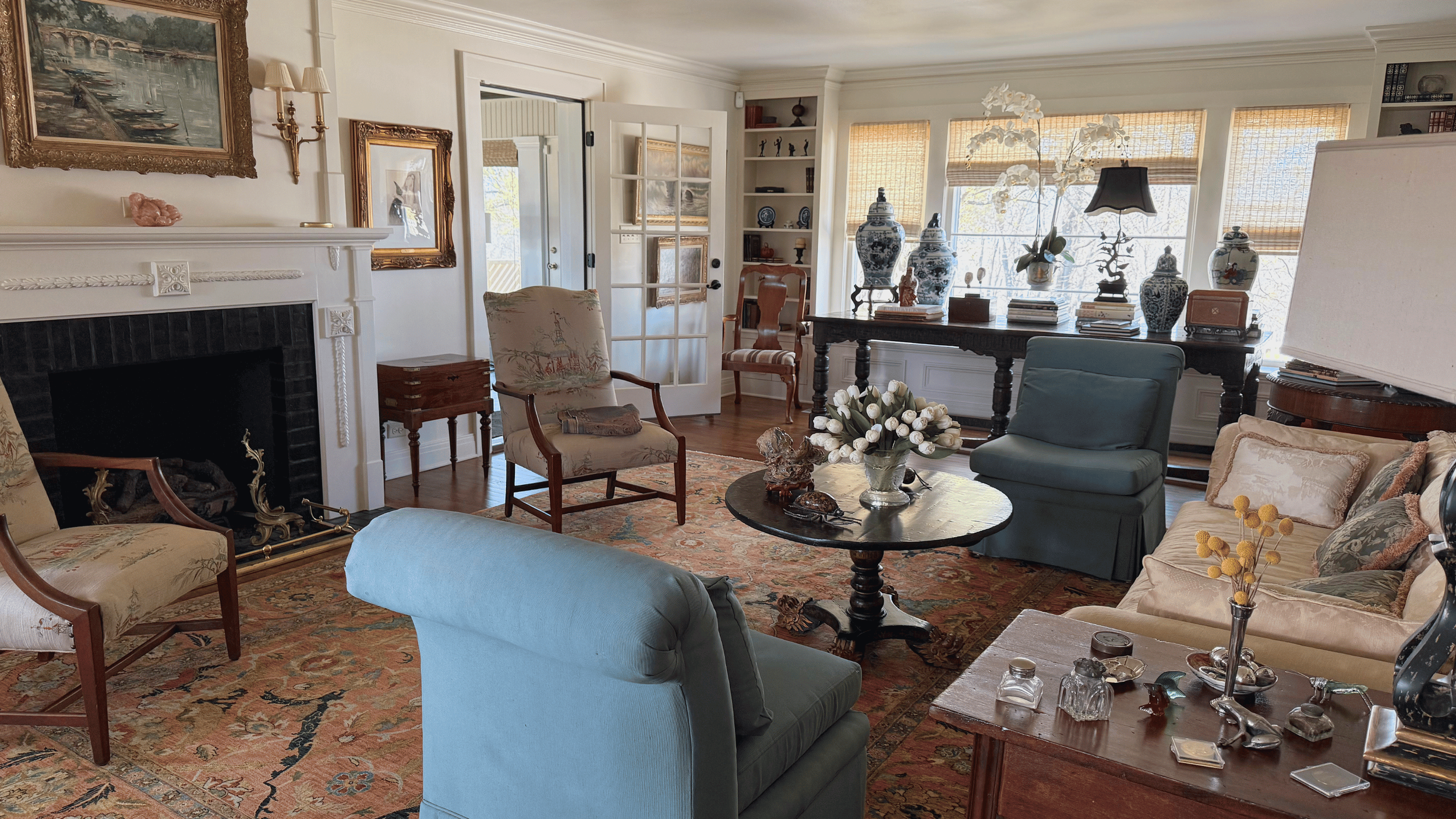
A room looks finished when nothing in it draws your eye to a flaw. The walls are smooth, the trim lines are tight, the sheen is even, and the light moves across every surface without catching a patch or a gap. Color is part of it, but most of that feeling comes from the repair and finish work underneath.
Most homeowners can’t name what makes a room feel calm, but they notice right away when it’s missing.
Edges, Reveals, and Light
Look at where surfaces meet: wall to ceiling, wall to trim, trim to floor. Those lines frame the whole room. When they’re crisp and consistent, the room reads as intentional. When they wander, even slightly, it reads as rushed.
Light is what shows the difference. Daylight raking across a wall highlights every ridge, patch, and roller mark, which is why we check surfaces in raking light before and after finishing, not just under ceiling lights.
Walls First: Cracks, Patches, and Primer
A smooth wall starts with repair. Cracks are opened and filled, nail holes and dents are patched, and repairs are sanded and feathered into the surrounding surface. Texture is matched where it applies, so a patch doesn’t announce itself later.
Primer matters as much as the filler. Patched areas absorb paint differently from the wall around them, and unprimed repairs can show through as dull or blotchy spots, even under premium paint. A primer that bonds to the existing surface also keeps the finish from peeling later. We cover the full sequence in our post on [prepping drywall and trim before painting].
Trim and Joints: Tight Caulk, Closed Miters, Crisp Profiles
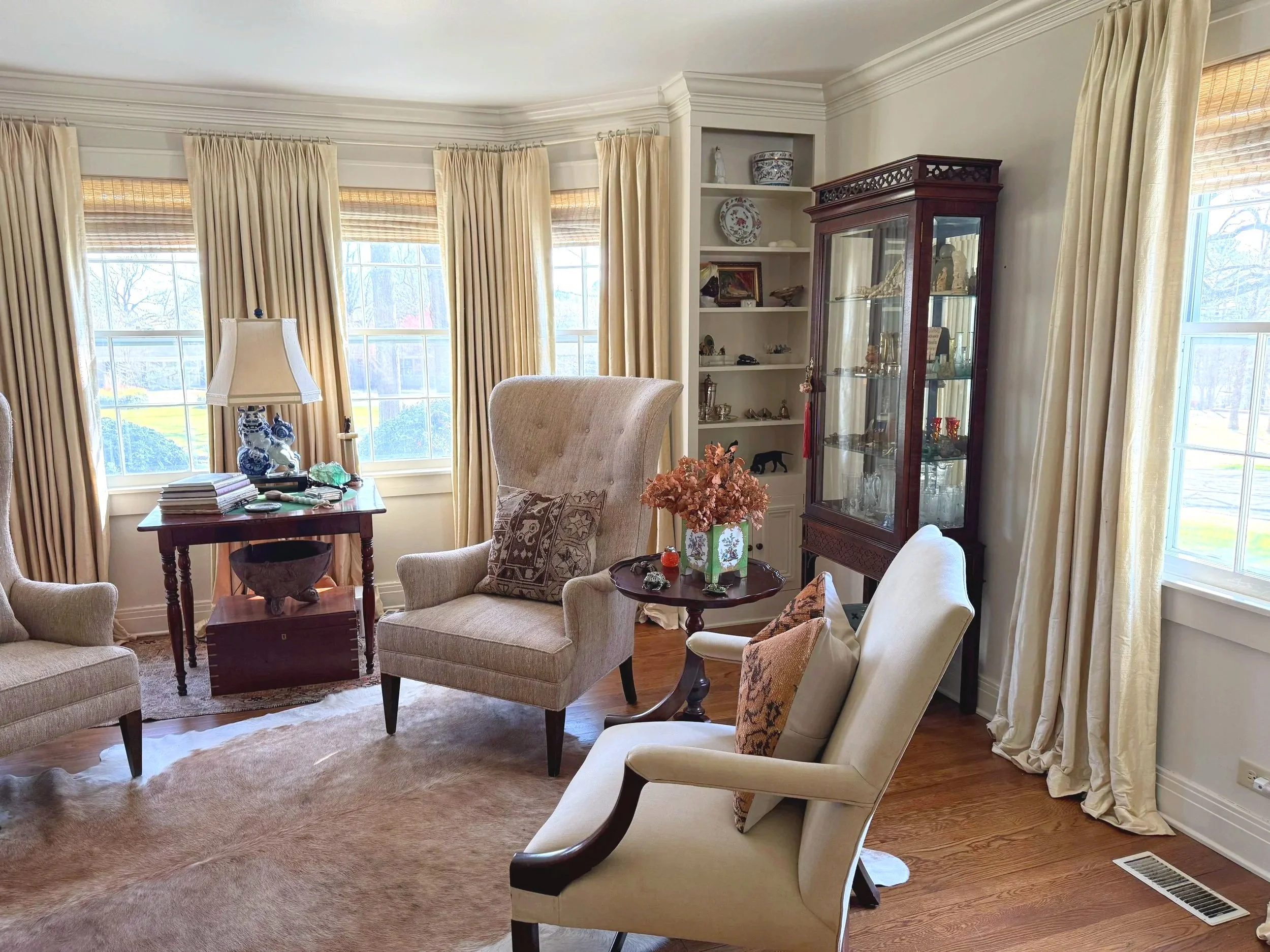
Trim is where craftsmanship shows up at eye level. Our focus is on:
Caulk lines. A clean, consistent bead at the trim-to-wall joint closes gaps that would otherwise cast shadows and collect dust.
Open miters. Corners that have separated over time are closed and filled so the joint looks continuous.
Profiles. Layers of old paint can soften a trim profile. Careful sanding and prep bring back crisp edges, especially on original woodwork in historic homes.
When these details are right, the finish coats look like part of the architecture instead of something added on top.
Sheen: Matte, Satin, and Everything Between
Sheen changes how a room feels. A flatter finish hides surface imperfections and gives walls a soft, quiet look. A higher sheen reflects more light and stands up better to cleaning, which is why trim is usually finished with more sheen than the walls around it.
The tradeoff is simple. The glossier the finish, the more it shows about the surface beneath. That’s why high-sheen areas demand the best prep, and why we talk through wall finish expectations with you before the work begins.
Oil, Latex, and Compatibility
Older Central Arkansas homes often have oil-based paint on trim. A waterborne finish applied over oil without the right preparation can peel, so the old surface is cleaned, sanded, and primed with a product that bonds to it before the new finish goes on. That step is invisible when it’s done right, and obvious when it’s skipped.
Painting in an Occupied Home
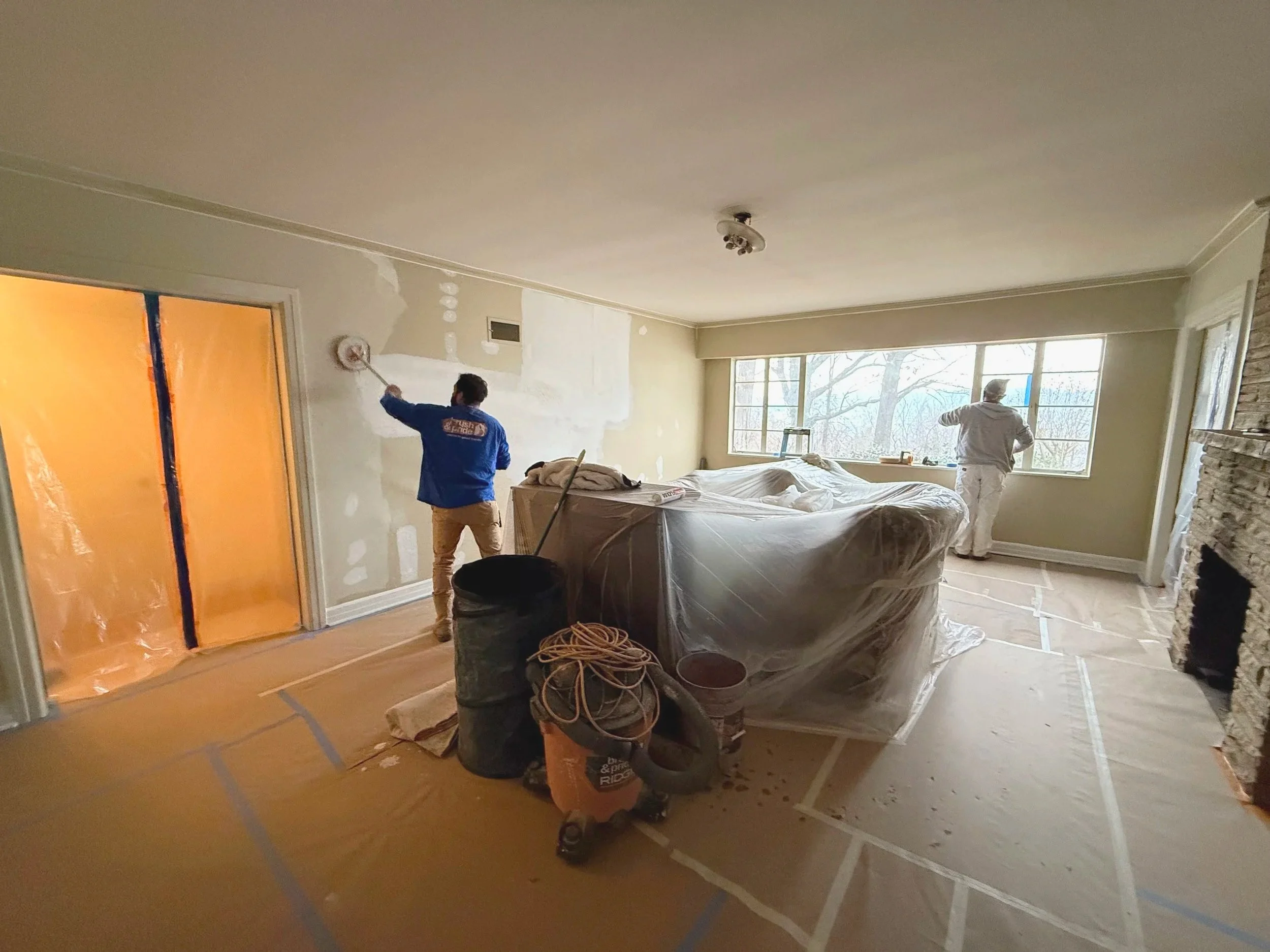
Most of our interior clients are living in the home during the work, so the process is built around that. Rooms are protected with rosin paper and plastic encapsulation, which contains dust and keeps furniture and floors clean. Kitchens are always fully encapsulated and vacuum-vented. We work room by room and talk through the schedule with you in advance, so the house stays livable.
Frequently Asked Questions
Why do some painted rooms still look uneven after a fresh coat?
Usually because of what’s underneath: unrepaired cracks, unprimed patches, or an inconsistent surface. New paint highlights those problems instead of hiding them.
What’s the difference between matte and satin paint?
Matte reflects less light and hides imperfections, which suits most walls. Satin reflects more light and cleans more easily, which suits trim and high-traffic areas.
Should trim be caulked before painting?
Yes. Caulking the joint between trim and wall closes gaps and gives the finish a clean, tight line.
Can you paint a room while we’re living in the house?
Yes. We protect each room with rosin paper and plastic encapsulation and plan the work around your household.
Do you serve my area?
Our residential work is centered on Little Rock, North Little Rock, Maumelle, Conway, Cammack Village, and Roland, and we take on other Central Arkansas projects selectively.
Start With a Conversation
If you want a room that feels finished and not merely repainted, we’ll look at the surfaces and tell you what the project requires. Schedule a private consultation to see if your project is the right fit.
