Sherwin-Williams Gallery Series Review: Is It Good for Cabinets?
Yes. Brush & Pride Painting considers Sherwin-Williams Gallery Series a good professional coating for cabinet refinishing, and we like the finish the product can produce.
Our caution with Gallery Series isn’t that it’s a bad product or that we don’t recommend it.
It’s understanding one of its limitations:
Gallery Series can become dry to the touch relatively quickly while the coating is still developing the hardness and film strength needed to resist scratching, chipping, and other physical damage.
That distinction matters on kitchen cabinets because a surface that feels dry naturally gives the impression that it’s ready for normal use.
In our experience, that’s where Gallery Series requires some caution.

What Is Sherwin-Williams Gallery Series?
Gallery Series Waterborne Topcoat is a professional-grade coating designed for applications such as kitchen cabinets, woodwork, and other wood or composite building products.
Sherwin-Williams designed Gallery Series as a spray-applied coating capable of producing a smooth, factory-like finish. It is also known for relatively fast dry and recoat times.
Brush & Pride likes Gallery Series.
But when evaluating any coating, we think it’s equally important to understand its limitations as its strengths.
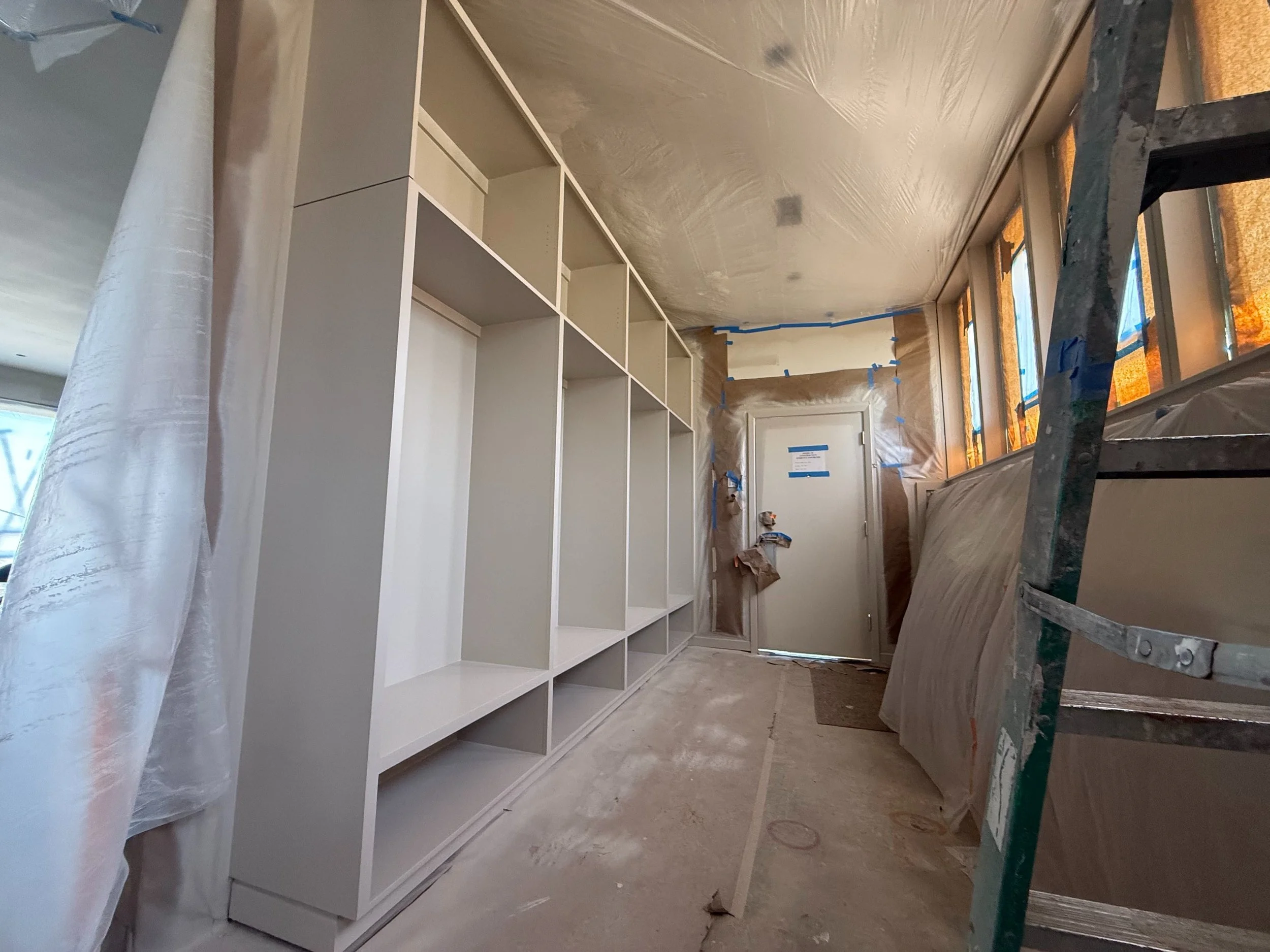
Dry to the Touch Is Not the Same as Fully Cured
This is the most important thing we communicate about Gallery Series.
There are several different stages in the drying and curing process of a coating.
A surface may be:
Dry to the touch — You can touch the surface without transferring wet paint.
Dry enough to handle or recoat — The coating has developed enough to continue certain stages of the refinishing process.
Fully cured — The coating has developed the film properties and hardness expected from the finished product.
Those stages should not be treated as interchangeable.
Gallery Series can feel dry relatively quickly.
But based on our experience, the coating can remain susceptible to scratching, chipping, impressions, and other physical damage while it continues to cure.
That’s particularly important because the surface doesn’t necessarily feel vulnerable.
It looks finished.
It feels dry.
But the coating film is still developing.
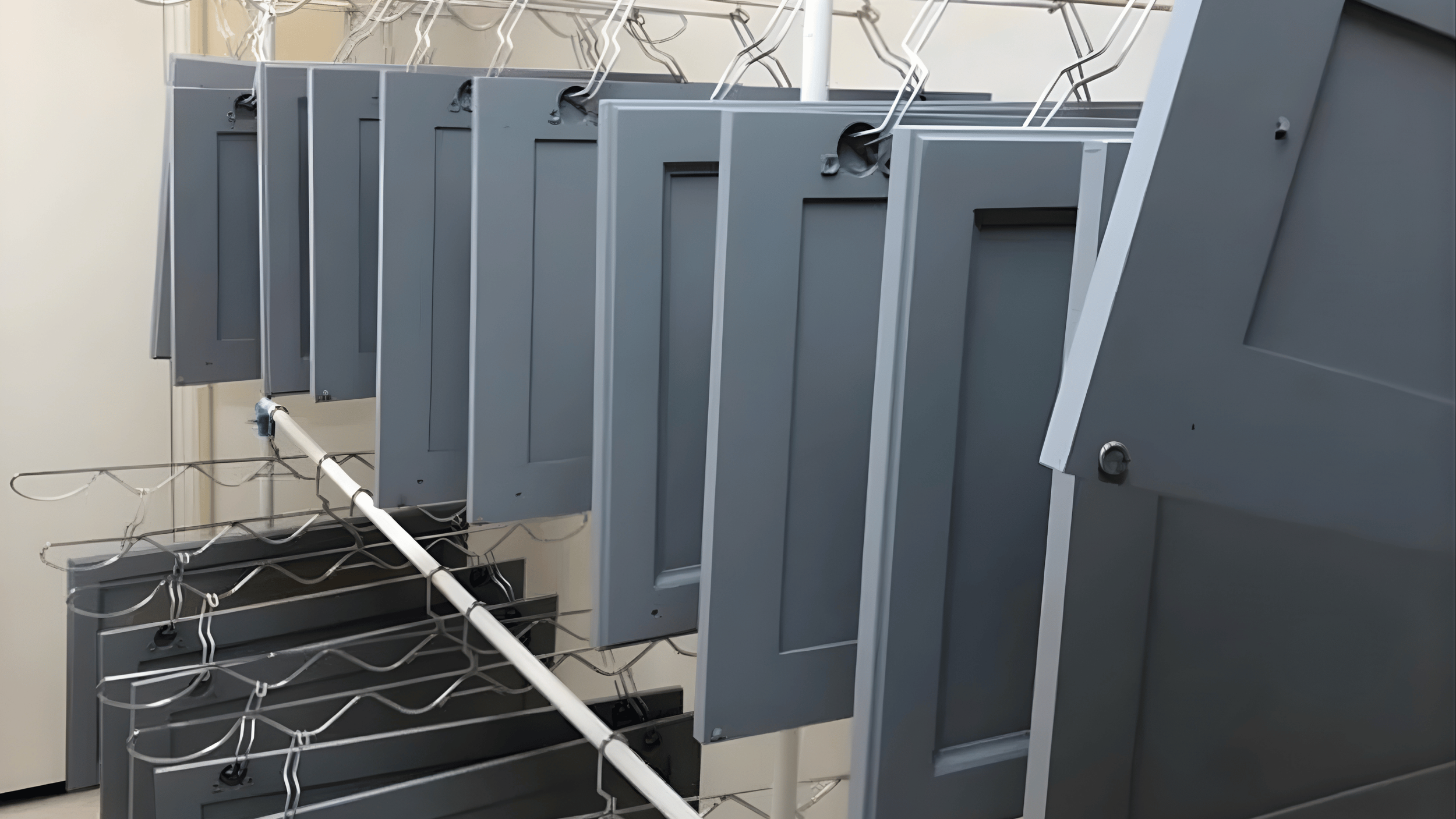
Why the Fast Dry Time Can Be Deceiving
One of the strengths of Gallery Series can also create one of the biggest opportunities for accidental damage.
If a freshly painted surface is obviously wet or tacky, people instinctively leave it alone.
Gallery Series can reach a point where it looks and feels finished relatively quickly.
That can create a false sense that the cabinetry is ready for unrestricted normal use.
A cabinet door gets closed against another surface.
Hardware gets aggressively handled.
Something bumps an edge.
The cabinets get cleaned.
A door or drawer gets scratched.
The homeowner may understandably wonder why a “dry” coating was damaged so easily.
The answer can be that dry and cured are two different things.
That’s why the curing period and protection requirements need to be clearly communicated when Gallery Series is used.
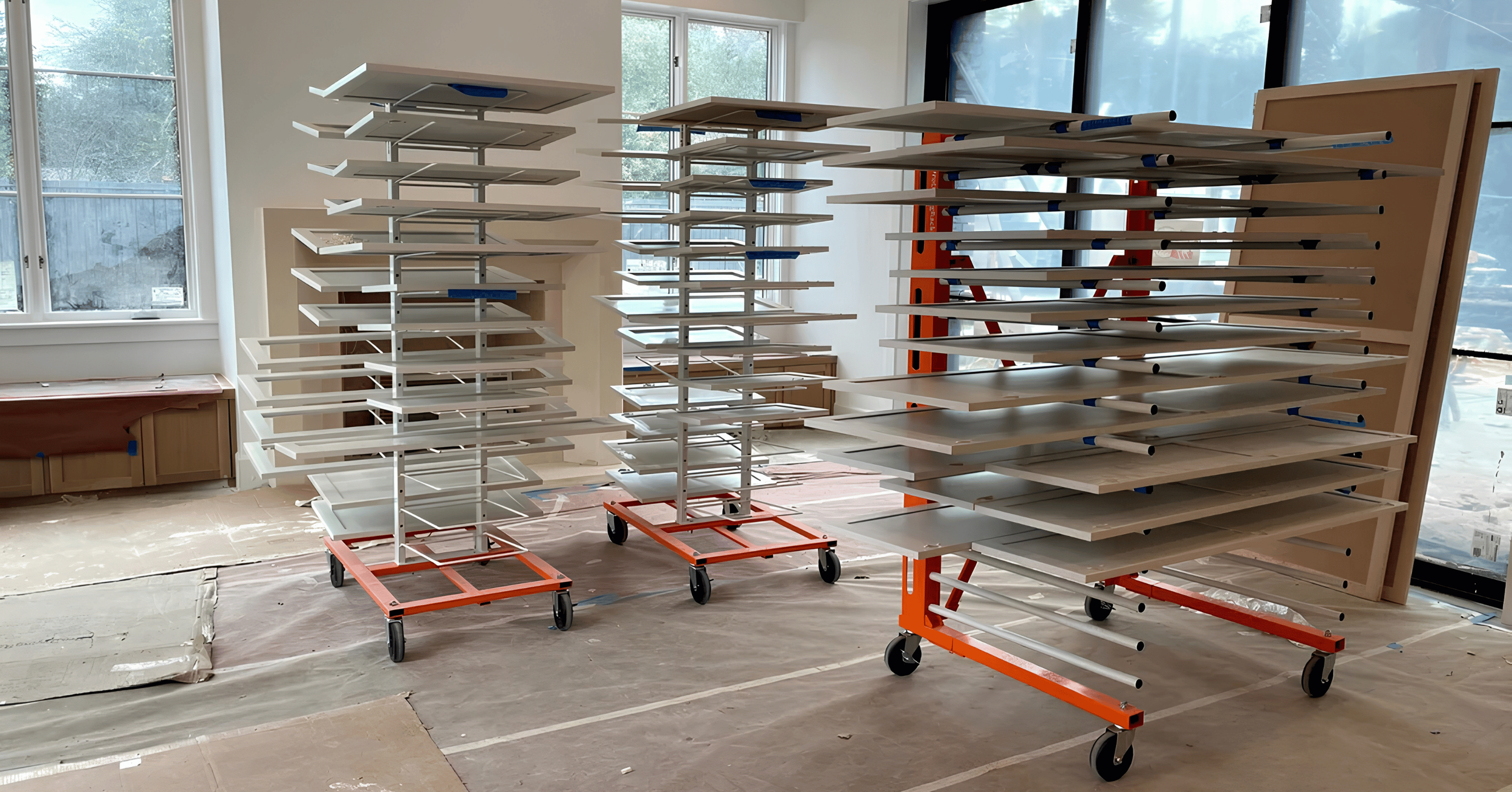
Gallery Series Compared With Traditional Oil Paint
Traditional oil-based coatings illustrate this distinction well.
Oil paint can remain tacky to the touch considerably longer. That longer obvious drying period can be inconvenient, but it also communicates something very clearly:
The paint isn’t ready yet.
As an oil coating dries and cures, it develops a hard, strong film. Depending on the particular coating and conditions, its early film development can behave very differently from a fast-drying waterborne product.
Gallery Series presents almost the opposite communication challenge.
It can become dry to the touch quickly, but that doesn’t mean the coating has already developed all of the physical resistance it will eventually have.
So a homeowner may actually need to be more conscious of protecting a surface that already feels dry.
We’re not suggesting that oil paint is automatically better than Gallery Series.
They’re different coating technologies with different characteristics.
The point is that touch-dry time isn’t a reliable measurement of how resistant a coating is to physical damage.
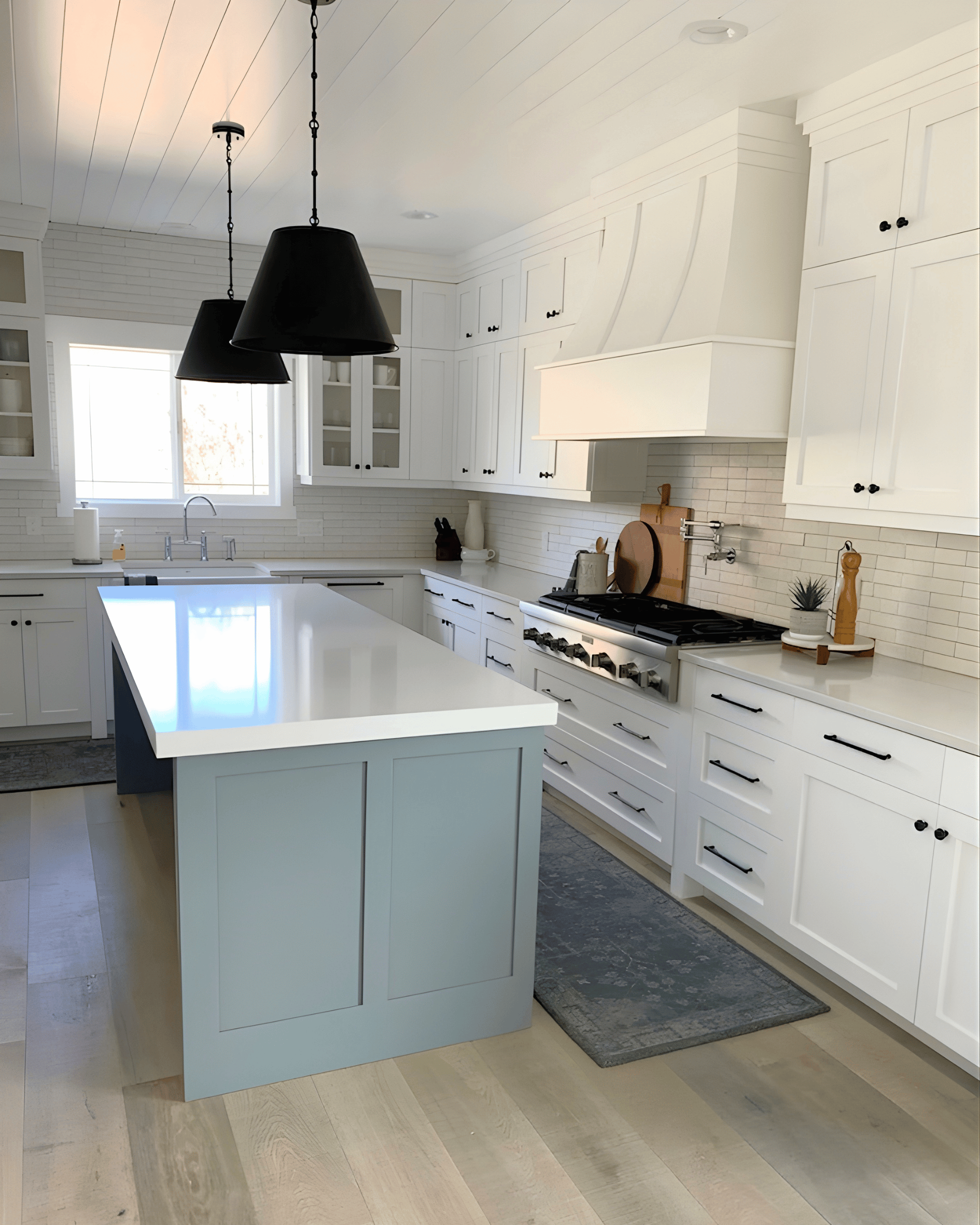
Why This Matters So Much on Kitchen Cabinets
Cabinets are high-contact surfaces.
Doors and drawers are constantly opened, closed, bumped, wiped, and handled.
Edges can contact neighboring doors.
Hardware gets pulled.
Cookware, dishes, appliances, children, pets, and everyday household activity all introduce opportunities for damage.
That’s very different from painting a wall that can remain relatively untouched while the coating cures.
When Gallery Series is used on cabinets, the homeowner needs clear return-to-service instructions.
The project may look complete.
The cabinets may feel dry.
But they still need to be treated carefully while the coating develops its full properties.
Protecting Gallery Series During the Curing Period
Good communication after cabinet refinishing is important.
When Gallery Series is used, homeowners should understand that freshly coated cabinetry may require additional care even after it feels dry.
That can mean avoiding unnecessary impacts and scratches, being careful when opening and closing doors and drawers, avoiding aggressive cleaning, and generally treating the finish as a newly applied coating rather than a fully matured surface.
The exact drying and curing process can also be affected by temperature, humidity, film thickness, ventilation, application conditions, and other factors.
The contractor should explain appropriate return-to-service expectations for the specific project.

Does This Mean Gallery Series Isn’t Durable?
No.
Our caution concerns the curing period, not a blanket statement about the long-term performance of a properly cured Gallery Series finish.
That’s an important distinction.
A coating can be vulnerable during film development and perform very differently after it has fully cured.
Our concern is making sure freshly refinished cabinets get through that vulnerable period without unnecessary damage.
Proper Preparation Still Matters
The topcoat is only one component of a professional cabinet refinishing system.
Depending on the existing cabinetry and finish, proper preparation may include:
Cleaning and degreasing
Sanding
Repairs
Proper primer selection
Masking and protection
Controlled spray application
Sanding between appropriate stages
Proper drying and curing conditions
Even an excellent cabinet coating can’t compensate for inadequate preparation.
That’s why homeowners comparing cabinet refinishing proposals should evaluate the entire process—not simply the product name on the topcoat.
Does Brush & Pride Recommend Gallery Series?
Yes—with proper expectations.
Brush & Pride likes Gallery Series and considers it a legitimate professional cabinet coating.
Our caution is that contractors and homeowners need to understand its curing characteristics.
Don’t mistake dry to the touch for fully cured and ready for unrestricted use.
When Gallery Series is specified, the protection of the newly finished surfaces and expectations during the curing period should be clearly communicated.
That’s part of using the product correctly.
Frequently Asked Questions
Is Sherwin-Williams Gallery Series good for kitchen cabinets?
Yes. Brush & Pride considers Gallery Series a good professional cabinet coating capable of producing a smooth, attractive finish. Our primary caution involves protecting the finish while it continues to cure.
Why can Gallery Series scratch even though it feels dry?
A coating can become dry to the touch before it has developed its full film hardness and physical resistance. Based on our experience, Gallery Series can remain more susceptible to scratching and chipping during this period.
Does dry to the touch mean cabinets are fully cured?
No. Drying and curing are different processes. A coating can feel dry while its film is still developing hardness and resistance to physical damage.
Is oil paint stronger than Gallery Series?
The technologies behave differently during drying and curing. Traditional oil coatings can remain noticeably tacky longer while developing a hard film, whereas Gallery Series can become touch-dry relatively quickly while still requiring additional curing time. The appropriate coating depends on the application rather than one technology being universally superior.
Should freshly painted Gallery Series cabinets be used normally right away?
We recommend treating freshly refinished cabinets carefully during the curing period. The fact that the surface feels dry shouldn’t be interpreted as meaning the coating has reached its full physical properties.

Our Bottom Line on Sherwin-Williams Gallery Series
Brush & Pride likes and recommends Gallery Series when it’s appropriate for the project.
It can produce a smooth, professional cabinet finish and has characteristics that make it attractive for professional refinishing.
But every coating has limitations that need to be understood.
For Gallery Series, one of the most important is the difference between how quickly the coating feels dry and how long it takes to develop its fully cured film properties.
That gap can be deceiving.
Because the cabinets look finished and feel dry, homeowners may naturally begin treating them as fully cured surfaces. In our experience, that’s when scratching, chipping, and other premature damage are most likely to become a concern.
The solution isn’t necessarily to avoid Gallery Series.
The solution is to understand the product, communicate its limitations, and protect the finish appropriately while it cures.
That’s how Brush & Pride approaches coating selection in general.
We don’t expect every product to be perfect for every application. We want to understand what a coating does well, where its limitations are, and what the project requires.
Choosing the right paint isn’t simply choosing a product. It’s understanding how that product behaves in the real world.
Brush & Pride Painting Company
Professional Cabinet Refinishing • Interior Painting • Exterior Painting • Residential Restoration
Little Rock & Central Arkansas