
The short answer
Paint peels when it never bonded to the surface beneath it. The usual causes are a surface that was not cleaned and primed before painting, a water-based paint applied over oil-based paint without the right primer, and moisture working on the paint from behind or beneath.
What is actually happening
Peeling is a loss of adhesion: the coating separates from the surface or from an earlier coat (Sherwin-Williams). Paint holds by grip, and grip depends on what is under it. The cause looks different on each surface, but it is usually the same story.
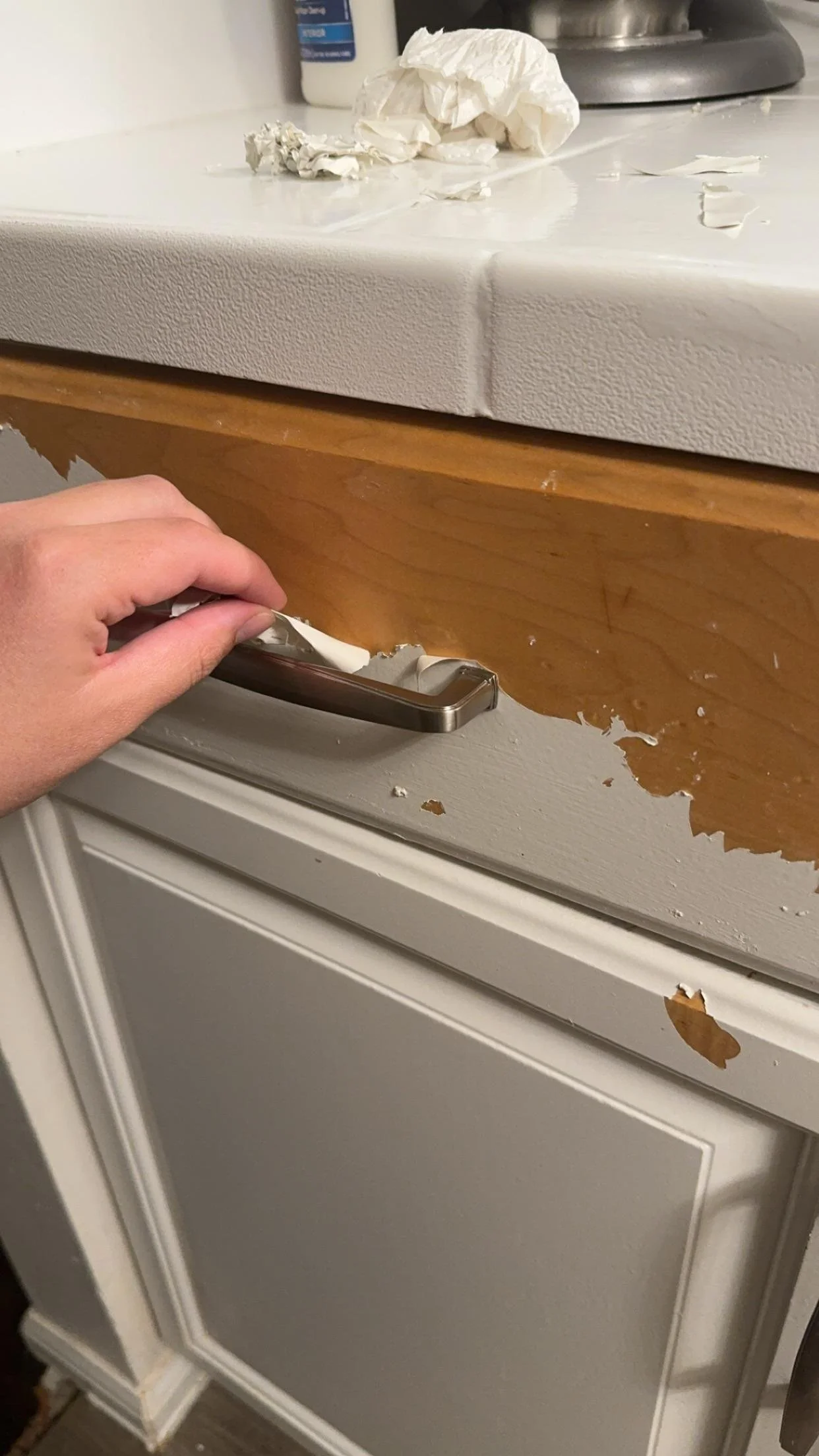
Cabinets. Kitchen cabinets collect cooking residue and hand oils that are easy to miss. If the cabinets were not degreased and cleaned, and not primed, the new paint sits on that film. A common version is water-based paint applied directly over an oil-based finish. The two are not compatible, so the new coat can delaminate from the oil-based layer beneath it. When it lets go, it comes off in sheets, much like sunburned skin. Sherwin-Williams notes the same underlying rule: any coating applied to a hard, slick, glossy surface is likely to peel because adhesion is difficult to achieve (Sherwin-Williams).
Walls. When paint comes off a wall and exposes bare drywall, the cause is usually that the drywall was never primed. Without primer, there is nothing to seal the surface and give the paint something to bond to. The paint ends up gripping a thin layer of drywall dust and joint compound dust rather than the wall itself, so it can come away in large sections. Moisture behind the wall makes it worse.
Trim. Latex peeling off trim is the same pattern as the cabinets: a water-based coat over an oil-based finish that was not primed for it.
What you can check yourself, and where it stops
Press a strip of painter's tape firmly onto an affected area and pull it off. If paint lifts with it, the problem is adhesion rather than wear. Professionals use a formal version of this check, ASTM D3359, which is a standard tape test for rating coating adhesion (ANSI). A kitchen-table tape pull is not a rating, but it tells you whether the film is firm or letting go.
Look at the pattern. Paint coming away in large sheets, on a cabinet door, a wall or a length of trim, points to a coating that never bonded. Small chips along edges and corners are different: if the cabinets are otherwise sound, that is damage, not failure, and it can be addressed as damage.
If the problem is moisture, find and fix the source of water first, since repainting over an active leak fails again (Sherwin-Williams).
The check stops at a failure. We do not recommend touch-ups on a failed surface, and we do not discuss them as an option. New paint over a failed coating fails the same way, and no topcoat corrects a bond that is not there.

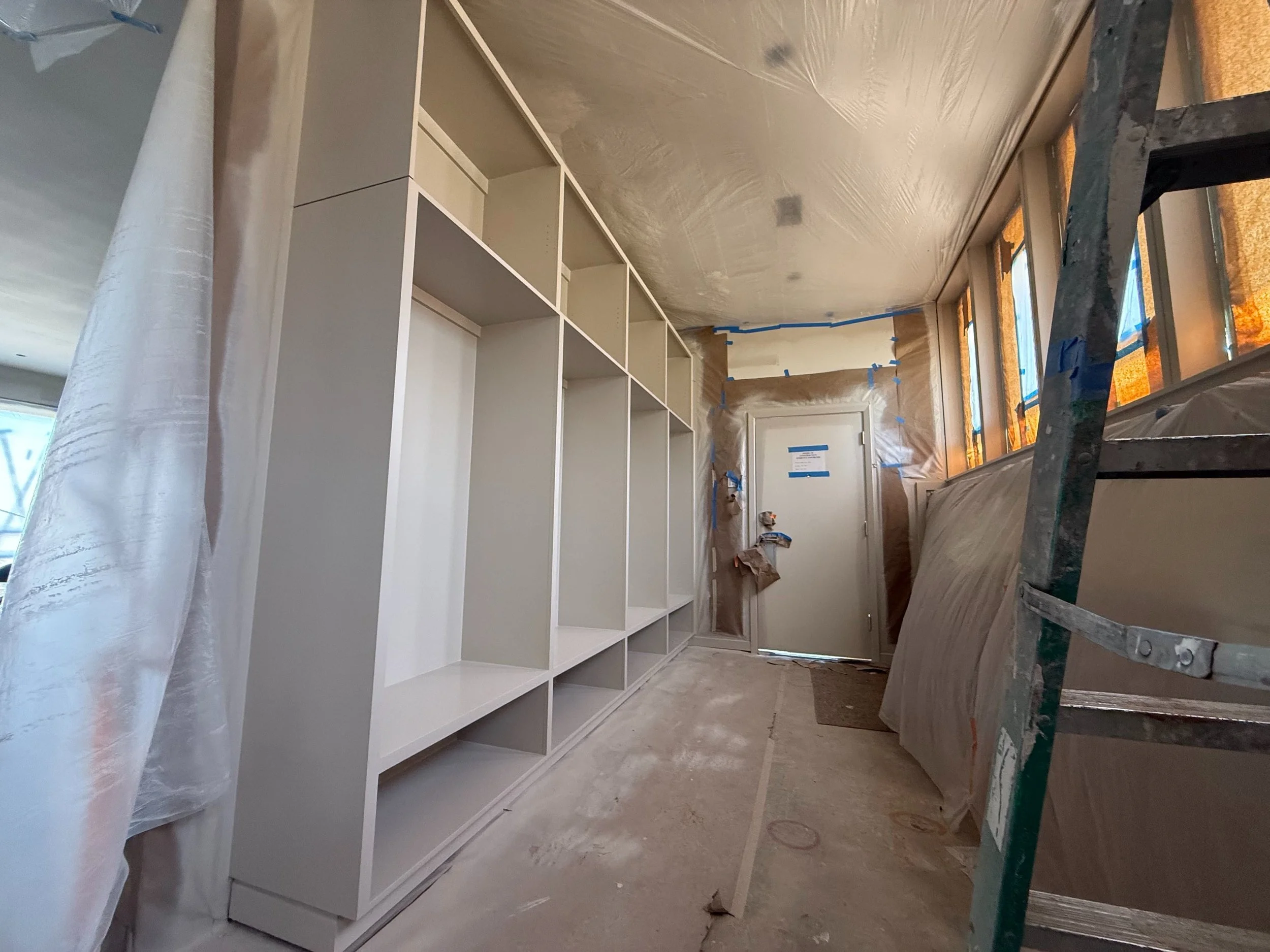
Conway, Arkansas - Here you can see, we’re sanding trim before priming. Surface preparation is an important step that can not be skipped.
How we approach it
When the finish has failed, the entire surface is taken back to the substrate. We then rebuild the system from the ground up.
Cabinets: cleaned and degreased, primed with two coats of primer, then one finish coat. The work is sprayed on site in a portable, vacuum-vented booth with drying racks, so the doors do not leave the house.
Walls: the surface is repaired and primed, then given two finish coats. We prime because the primer is what the paint bonds to.
Trim: latex over oil is the failure we see most often, so trim that has been painted over oil-based paint gets an oil-based primer before a waterborne topcoat.
We do it this way because each step answers one of the causes above: cleaning removes the film, primer gives the finish something to grip, and starting from the substrate removes the failed layer rather than hiding it.
What to expect if you work with us
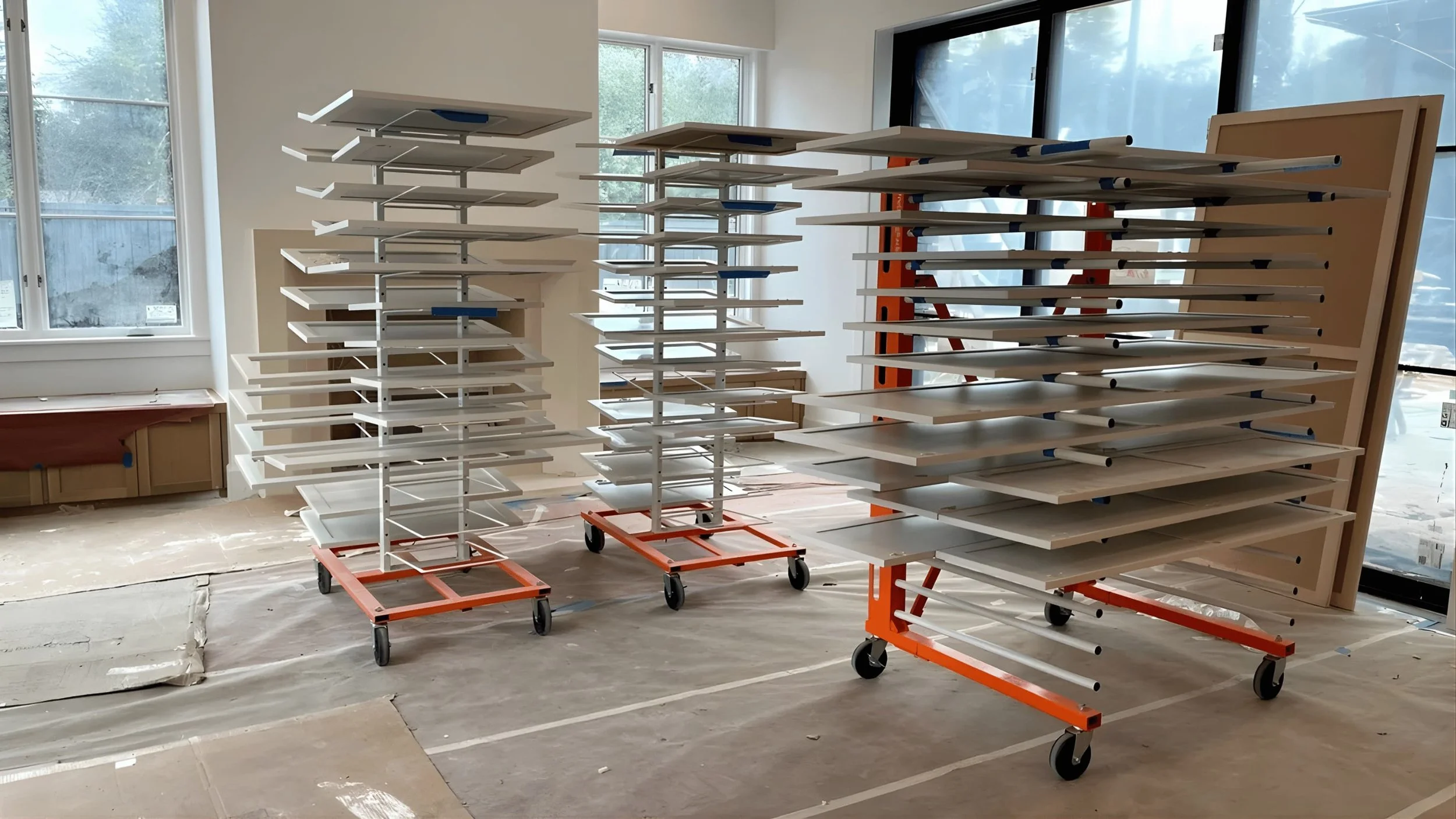
You receive a written scope before work begins, including what is and is not included. We supply and control all materials. Interiors are protected with rosin paper and plastic, never tarps, and kitchens are encapsulated and vacuum vented for the length of the project. On qualifying interior repaints and cabinet finishing, the You're In Good Hands Guarantee provides a lifetime warranty at no extra cost.
This work suits homeowners whose finish has failed and who want the cause corrected, not covered. If you are looking for a touch-up over a failing surface, we are not the right fit, and we will say so at the first visit.
A central Arkansas note
Many Arkansas buildings predate 1978, the year lead-based paint was banned for use in homes (UAMS). EPA states that about three-quarters of U.S. homes built before 1978 still contain some lead-based paint, and that anyone paid to disturb paint in those homes must be lead-safe certified (EPA). Taking a failed finish back to the substrate disturbs paint, so in an older home we want to know what is underneath before anyone sands. Brush & Pride is EPA lead certified and uses lead-safe work practices. We do not do abatement.
Related questions
Can I paint latex over oil-based paint? Only with the surface cleaned and the right primer first. Without it, the water-based coat is likely to separate from the oil-based layer and peel.
Will touch-ups fix peeling paint? Not when the coating has failed. The whole surface has to come back to the substrate, because new paint over a failed layer peels the same way.
Why is paint peeling off my drywall in sheets? Usually because the drywall was not primed, so the paint bonded to dust rather than the wall. Moisture behind the wall can add to it.
Why is paint peeling off my kitchen cabinets after a year? Most often the cabinets were not degreased and primed, or water-based paint was applied over an oil-based finish.

If this sounds like your project
If your paint is peeling and you would like to know whether a full repaint or cabinet refinishing is the right fit, schedule a private consultation. We will tell you what we see.
Brush & Pride Painting Company LLC. Serving Little Rock, North Little Rock, Maumelle, Conway, Cammack Village and Roland, Arkansas.
